
Building a passive safety check-in experience with clear expectations

EVERARC / FIELD NOTES
Building a passive safety check-in experience with clear expectations
Safety products deserve precise language because a missed signal and an actual emergency are not the same thing.
What the public product does
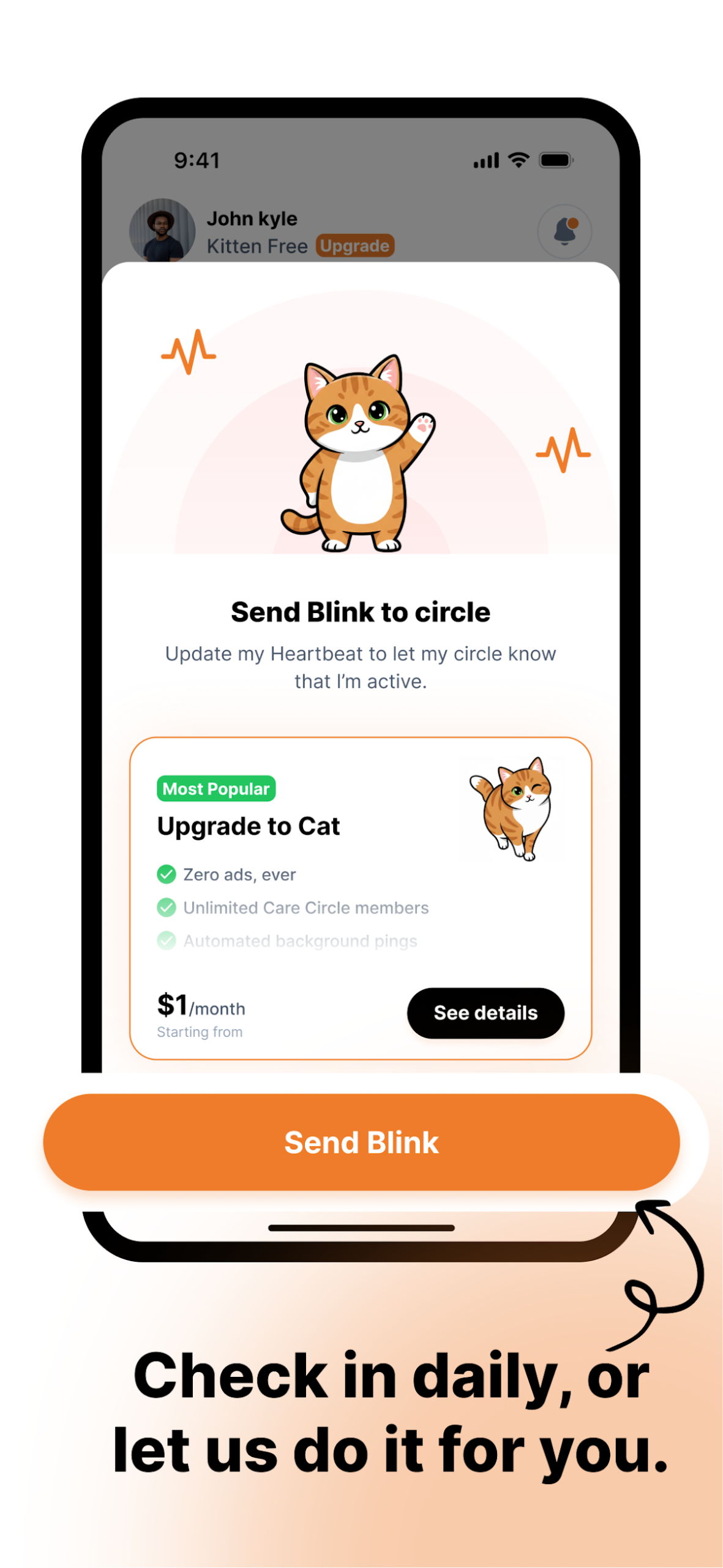
The Still Blinking? Google Play listing describes an app that observes ordinary phone activity and alerts a Care Circle if activity stops. It targets people living alone, older adults and families. The listing describes a passive approach without daily check-in buttons or continuous GPS tracking in that flow.
An alert is a prompt for attention
A lack of phone activity does not by itself prove that someone needs emergency help. They may have set down the device, lost a connection or changed their routine. Wording should make the meaning of an alert plain, and a family member should know what sensible next step to take. Avoid claims of guaranteed detection.
The monitored person needs agency
People who live independently should understand what information is used and who can receive an alert. A product like this has to balance reassurance for family with respect for autonomy. Onboarding is where those expectations should be made explicit, using words that people can understand without interpreting technical terms.
Design for both sides
The person being monitored and the caregiver do not have identical goals. One wants a low-friction routine and privacy; the other wants understandable notifications. Interface testing should include both perspectives and consider what happens when an alert is delayed, mistaken or no longer relevant.
What the portfolio shows
Our case study links to the published app and shows an actual product screenshot. Features described here are based on the public listing. We have not stated a false-alert rate, clinical outcome or emergency-response guarantee.
PRACTICAL QUESTIONS
Questions teams ask about this work
Does the app track location?
The public Still Blinking? listing says its passive check-in flow does not use GPS tracking and instead looks at ordinary phone activity. Its full store data-safety disclosure should still be reviewed for other information processed by the app. Those statements should not be collapsed into a broad privacy guarantee.
Is no phone activity an emergency?
No. Lack of activity can have many explanations. The Care Circle alert is a signal to check in with a person, not a diagnosis or proof of a medical emergency. The product should make that distinction clear in its onboarding and notifications.
Who receives an alert?
The published product description names a Care Circle of people chosen by the user, such as family, friends or neighbors. Any current configuration and notification details should be checked in the live app. This article does not claim access to an individual user’s settings.